
Wizileaks - County Edition Kisii Devolution Dream, Hijacked by Greed
Kisii County is plagued by entrenched corruption—through inflated tenders, land grabs, and ghost workers. Officials collude to bypass finance laws, pay themselves fraudulent allowances, and divert funds to cronies. The Lands Registry operates as a bribery hub, while payroll audits reveal hundreds of ghost staff. Combined with stalled projects and mismanaged funds, the result is systemic abuse and political shielding that robs citizens of development.
Where it Hurts
Procurement Fraud & Tenderpreneurship

Kisii’s procurement and financial management systems have routinely been exploited through inflated pricing, irregular procurement processes, poor financial controls, and weak internal oversight. County officials and MCAs colluded to bypass public finance laws, pad budgets, and divert funds through inflated or unnecessary purchases disguised as official spending.
Example: Kisii County Assembly Procurement Irregularities:
A 2016 EACC investigation uncovered multiple procurement abuses within the Kisii County Assembly and Executive. Items were grossly overpriced, including a thermos flask bought at KES 8,697 and a cooking gas cylinder at KES 15,000. Tablets worth KES 7.6 million were procured through quotations instead of open tendering, a clear violation of procurement law since the amount exceeded the KES 4 million threshold. Additionally, MCAs were fraudulently paid sitting allowances for sessions they never attended, including those on maternity leave.
- Non-compliance with procurement laws: Officials bypassed open tender requirements using quotations to fast-track overpriced contracts to favored suppliers.
- Absence of financial and asset controls: No updated asset register made fraudulent purchases easy to conceal.
- Manipulated payroll and allowances: Sitting allowances were paid mid-month to absentee MCAs, including those on leave.
- Ignored internal warnings: Memos flagged unapproved procurement but were ignored.
- Poor documentation: Payrolls processed through unsecured spreadsheets enabled ghost workers and salary fraud.
- Ineffective sanctions: While arrests followed public outrage, prosecutions stalled and key officers stayed in office.
Land grabbing and property fraud
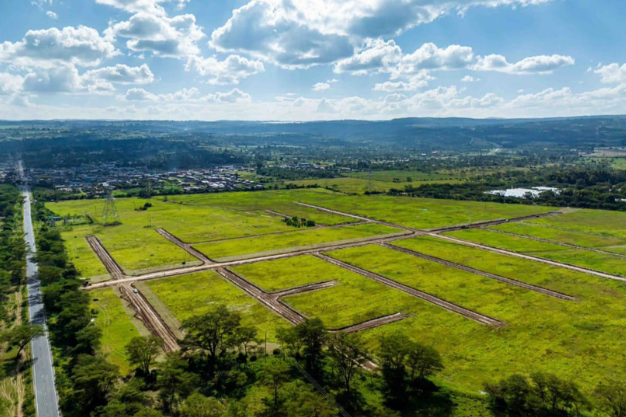
Kisii’s land registry has operated as a private market for fraud, where officials collude with brokers, politicians, and developers to illegally transfer public or contested land into private hands.
Example: Kisii Lands Registry Corruption Scandal
In 2018, EACC officers raided the Kisii Lands Registry, arresting six individuals including the Lands Registrar and four officers for soliciting bribes and manipulating land records. Treated cash was used to catch them in the act.
- Collusion and bribery: Registry officials and brokers altered ownership records in exchange for kickbacks.
- Manual records: Paper-based systems enabled retroactive land record manipulation.
- Weak audits: Poor supervision allowed corruption to persist unchecked for years.
- Political protection: Land cartels linked to senior officials shielded perpetrators from prosecution.
- Weak court enforcement: Developers ignored court orders; demolitions delayed or blocked.
- Low public trust: Victims feared retaliation and avoided reporting extortion or fraud.
Bloated Payrolls and Political Patronage
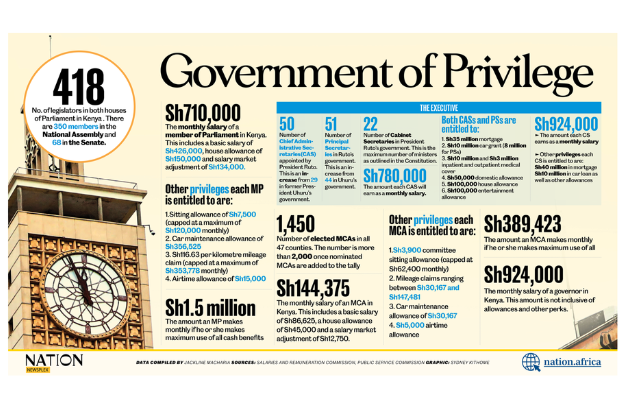
Kisii’s public payroll system has long been manipulated to serve political interests, rewarding cronies and siphoning public funds through ghost workers and fake appointments.
Example: Kisii County Ghost Workers Scandal
A 2023 payroll audit revealed at least 861 ghost workers — some estimates placed it over 1,300. These individuals received salaries but never reported to work.
- Manual systems: Outdated payrolls allowed easy addition of ghost names and poor tracking.
- No real-time verification: Lack of automated exit management allowed ghost workers to persist for years.
- Weak HR controls: Promotions and exits were influenced by loyalty, not merit.
- Internal collusion: Senior officials are suspected of benefiting directly from the scam.
- Delayed discipline: Few prosecutions followed the audit; implicated staff remain in office.
- Political interference: Patronage networks slowed enforcement and shielded perpetrators.
Since Devolution, Kisii has had two governors. While they may not be directly implicated in every scandal uncovered, the buck ultimately stops with them. Corruption has persisted across their tenures — not just in spite of their leadership, but often because of the systems they failed to dismantle.
The Buck Stops Here — But the Rot Runs Deeper
Since devolution, Kisii has had two governors, each inheriting a county riddled with financial malpractice, rigged tenders, land grabs, and petty bribery. While it’s tempting to tie specific scandals to individual administrations, the truth is far deeper and more troubling. What emerges from the record is not a series of isolated leadership failures, but a well-entrenched system of corruption that has outlived each regime. The real indictment lies in how little successive governors have done to confront or dismantle these networks. The indeed stops with them stop with them, but the rot runs through an entire system they’ve largely allowed to persist.


Audit Reports reveal a pattern of systemic cracks
Our analysis of Auditor-General findings for Kisii County reveals entrenched corruption and financial malpractice. Procurement systems are exploited through inflated tenders and irregular awards, grants are diverted, and stalled projects drain millions. Payroll audits expose ghost workers, while pending bills pile up without supporting documents. The result is a cycle of weak accountability and systemic abuse that denies citizens the services they were promised.
504.3 Million
The County breached the 35% legal ceiling on salaries, with pay rising to 47% of total receipts—an unlawful expenditure that diverted funds away from development and services.
Weak Internal Controls and Governance
Audits repeatedly flagged Kisii for poor controls and oversight. Revenue automation lacked policies, asset registers were incomplete, and risks went unmonitored. Internal warnings were ignored, allowing fraudulent allowances and irregular procurements to proceed unchecked—symptoms of a county where oversight mechanisms exist only on paper.

Unsupported and Irregular Expenditures:
Kisii’s records show widespread unsupported and irregular expenditures. A striking example is the KSh 345.9 million procurement of solar street lights (2017/18), flagged for lack of documentation and irregular contracting. Other cases include unsupported travel, diverted grants, and missing procurement records, revealing chronic indiscipline and disregard for financial regulations.

Unsustainable debt; Mounting Pending Bills:
Pending bills remain Kisii’s biggest unresolved liability. Auditors flagged over KSh 1.26 billion in unsettled obligations (2017/18), followed by KSh 923.9 million in unsupported bills (2019/20) and further reconciliation gaps in subsequent years. These debts, carried forward without verification or settlement, highlight a governance culture where past financial mismanagement is disclosed but never corrected.

Corruption Database
The total figure lost is an estimate drawn from Auditor General reports for Kisii County between 2016–2024. It was calculated by summing entries where the Auditor’s rationale explicitly showed public money was lost or misused — for example, cases of payments made for stalled or incomplete projects, undelivered goods and services, or direct embezzlement.
Entries where the Auditor highlighted risks, delays, or gaps in documentation without confirming a loss were excluded. This ensures the figure reflects only the amounts most clearly identified as compromised.
Review the full list of cases in our database, drawn from Auditor General reports, EACC investigations, and credible media reports, for a complete picture of corruption and financial mismanagement in Kisii County.