
Wizileaks - County Edition Homa Bay — Haunted by 1000+ Ghosts
An estimated KSh 4.46 billion has been lost through corruption cases documented by the EACC and media reports since 2012. Homa Bay’s corruption network revolves around procurement fraud, embezzlement of public funds, conflict of interest, and abuse of office. Investigations have exposed irregular tender awards, diversion of public money, and manipulation of recruitment and financial processes by county officials. EACC reports link senior officers to inflated contracts and irregular payments, while media investigations highlight the misuse of funds intended for health and infrastructure projects.
Ghost Worker Payroll Scandal
KSh 89 Million Lost
The biggest scandal we came across in Homa Bay was the payroll scandal,
which centred on allegations that the County Government of Homa Bay was
irregularly paying salaries to ghost workers, a pattern in EACC inquiry
Where it Hurts
Procurement as a Playground for Graft
Irregular tendering and inflated contracts dominate Homa Bay’s corruption landscape. The county has been repeatedly cited for bypassing procurement thresholds, falsifying evaluation documents, and paying for incomplete or undelivered projects.
Example: Irregular Procurement and Payment Irregularities (2020)
An EACC probe revealed procurement manipulation in which tenders were awarded without open competition, and payments totaling over KSh 700 million were made to companies linked to senior officials. The projects lacked completion certificates, and some contractors never delivered.
- Non-competitive awards: Tenders given without advertisement or evaluation.
- Overpayment: Contractors received full payment for partial work.
- False documentation: Completion reports fabricated to justify disbursements.
- Weak enforcement: Cases pending without prosecution.
Budgets Without Boundaries
Audit and investigation data show persistent misuse of county funds in Homa Bay. From inflated travel allowances to outright diversion of project budgets, public resources are routinely redirected away from service delivery.
Example: Misappropriation of County Funds (2018–2021)
Media reports exposed diversion of KSh 250 million meant for infrastructure and health projects. Funds were withdrawn in cash with no supporting documentation. Officials later claimed the money was used for “urgent operational needs,” but no records supported the explanation.
- Diversion of funds: Money earmarked for projects redirected elsewhere.
- No documentation: Withdrawals lacking receipts or expenditure proof.
- Accountability gap: No disciplinary or recovery actions taken.
- Impact on citizens: Projects left incomplete or abandoned.
Revenue Leakages and Collection Irregularities
Homa Bay County continues to lose significant revenue through weak collection systems and non-remittance of fees. Reports reveal that revenue officers and private collection firms routinely fail to bank collected funds.
Example: Unremitted County Revenue (2019–2022)
Between 2019 and 2022, investigations found unbanked revenues totaling KSh 110 million collected from markets and parking fees. The amounts were never reflected in county bank statements, and several officers failed to provide records for reconciliation.
- Manual revenue systems: No centralized tracking or digital oversight.
- Collusion: Officers collect cash and underreport daily returns.
- No reconciliation: Treasury books fail to match sub-county records.
- Public loss: Revenue meant for local services disappears before reaching accounts.
Since devolution, Homa Bay has had two governors. While they may not be directly implicated in every scandal, the buck ultimately stops with them. Corruption has persisted across their tenures — not just in spite of their leadership, but often because of the systems they failed to dismantle.
The Buck Stops Here — But the Rot Runs Deeper
Since devolution, Homa Bay has had two governors. The record that emerges is not isolated leadership failures, but a well-entrenched system of corruption that has outlived each regime. True, the buck stopped with them — yet the rot ran deep in a system they oversaw.
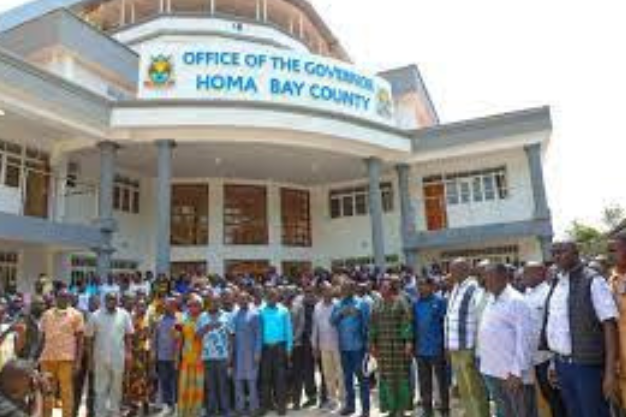
Image source: Uzima University

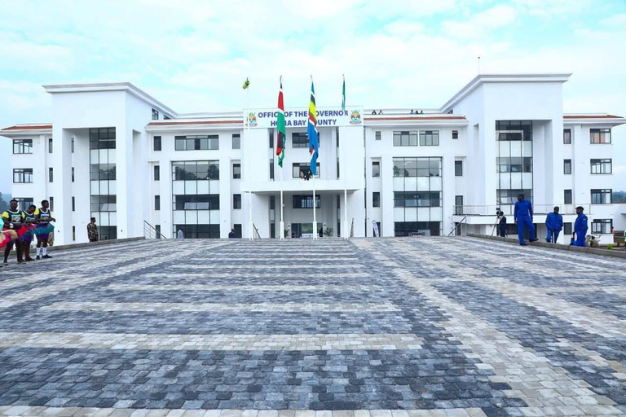
Image source: EJS Centre
Audit Reports reveal a pattern of systemic cracks
Auditor–General reviews of Homa Bay County between 2013 and 2024 reveal chronic weaknesses in financial control, expenditure tracking, and debt management. Across both administrations, the same audit concerns have re-emerged with little evidence of reform. In total, KSh 22.11 billion has been flagged for financial irregularities, unsupported payments, and governance lapses.
A County Without a Ledger: Weak Internal Controls and Governance
The county’s bank reconciliations, trial balances, and asset registers remain unreliable, often showing gaps between reported and actual figures. In 2016/17 the Auditor General cited unreconciled bank balances worth KSh 1.4 billion and missing asset documentation. By 2019/20 similar problems persisted — statements were submitted late and could not be tied to records. In 2022/23 the Treasury failed to reconcile conditional grants and donor funds, leaving over KSh 900 million unverified.
Debt without Memory: Persistent Pending Bills and Unresolved Liabilities
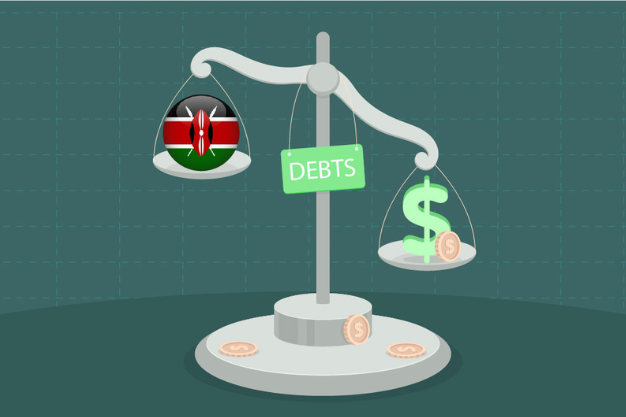
Pending bills distort annual budgets and drain resources from new projects. In 2016/17, pending bills of KSh 1.1 billion were carried forward without verification. By 2019/20, the figure rose to KSh 1.86 billion, and between 2020/21 and 2023/24 similar arrears continued to appear — often without proof of delivery or supplier confirmation.
Money Left on the Table: Revenue Leakages and Collection Irregularities
Own-source revenue remains weak. In 2017/18 auditors flagged KSh 410 million in uncollected or unremitted revenue. By 2021/22, losses exceeded KSh 600 million due to manual cash handling and lack of reconciliation between revenue offices and the Treasury.
Corruption Database
The total figure lost(displayed at the top of each county profile page) is an estimate drawn from a combination of Ethics and Anti Corruption Commission (EACC) reports and Office of the Auditor General (OAG) reports for Homabay County between 2013–2024. It was calculated by summing only those entries where the Auditor’s rationale explicitly showed that public money was lost — for example, payments made for stalled or incomplete projects, undelivered goods and services, unsupported bursary disbursements, or expenditures where, - and this is the preferred language the OAG liked to use - “Value for money was not realized.”
Specifically on the side of the OAG reports, entries where the Auditor highlighted risks, accounting delays, pending bills, or documentation gaps without confirming an actual loss were excluded, from the top shown at the top of the website. We call these compliance irregularities. However, we maintain these entries in the full dataset, and also in the figure we include in the OAG deep dive section of the website. This ensures the figure reflects only the amounts most clearly identified as compromised funds.
For a complete picture of corruption and financial mismanagement in this county, review the full list of flagged cases in our database, compiled from Auditor General reports, EACC investigations, and credible media reports.